
How to forecast demand for summer seasonal products
With forecasts pointing to a warmer-than-average summer in the UK, many retailers are adjusting their demand forecasting and inventory plans in anticipation of stronger seasonal sales.
But while hot weather can drive significant demand, it also introduces a level of volatility that traditional forecasting methods often fail to capture.
For retailers, the real challenge isn’t predicting demand — it’s managing uncertainty without overcommitting stock.

Why demand forecasting breaks down in hot weather
Most demand forecasting models rely on:
Historical sales data
Monthly or weekly averages
Long-term trends
But summer demand doesn’t behave like a typical trend.
Instead, it’s driven by short-term weather conditions, which means:
Demand can spike rapidly during warm periods
Sales can drop just as quickly when temperatures change
Consumer behaviour becomes unpredictable
“A hot summer can create very strong demand, but that demand often arrives in short bursts rather than steady growth.” — Michael Gould, Founder of Kaleidoscope
This creates a major gap between forecasted demand and actual sales patterns.
The biggest forecasting mistake: assuming steady growth
Why do retailers overstock in summer?
One of the most common demand planning mistakes retailers make is treating strong early sales as a signal of sustained demand.
In reality:
Early heatwaves often trigger temporary spikes
Retailers increase orders to keep up
Demand cools off — but inventory commitments remain
The result? Overstock, discounting, and margin pressure.
Effective demand forecasting for retail requires recognising that weather-driven demand is non-linear.
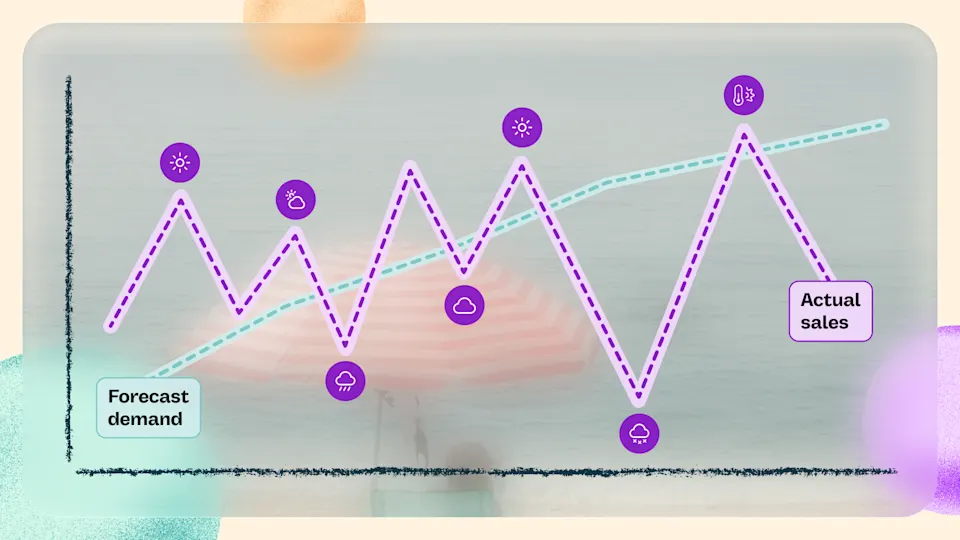
Demand forecasting vs demand reality: spikes, not trends
In categories like:
Garden furniture
Barbecues
Fans and cooling products
Summer clothing
Demand typically follows a pattern of peaks and troughs, not smooth growth.
This creates challenges for retailers using static forecasts or rigid inventory plans.
To adapt, businesses need to shift from:
Fixed forecasts → dynamic demand forecasting
Long-term assumptions → real-time adjustments
A better approach: flexible demand forecasting
How to manage inventory during hot weather
To manage uncertainty, retailers should rethink how they approach inventory forecasting and demand planning.
1. Use staged purchasing instead of bulk buying
Rather than committing to large volumes upfront, place smaller, more frequent orders.
This reduces risk and allows forecasts to be updated as demand becomes clearer.
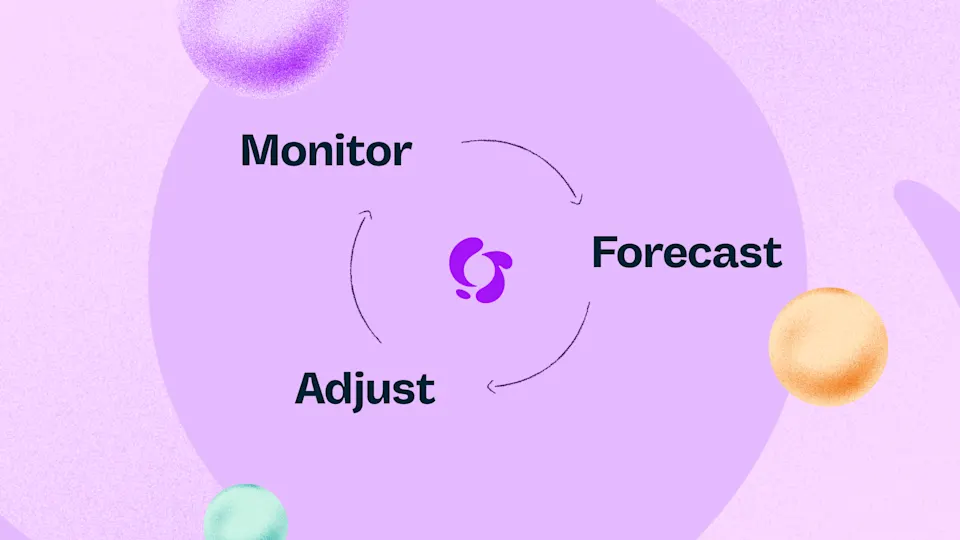
2. Treat forecasting as an ongoing process
Demand forecasting shouldn’t be a one-time exercise.
Retailers should:
Monitor sales data closely
Update forecasts weekly (or more frequently in peak periods)
Adjust purchasing decisions in real time
3. Don’t overreact to early demand signals
Short-term spikes — especially weather-driven — are not reliable indicators of long-term demand.
Strong early sales ≠ sustained growth.
Why cash flow matters in demand planning
Demand forecasting isn’t just about sales — it’s about financial outcomes.
Overestimating demand leads to:
Excess inventory
Cash tied up in stock
Increased storage and operational costs
Discounting that erodes margins
“The real danger in a hot summer is running out of cash because too much money is tied up in inventory.”
Strong inventory planning and demand forecasting should always consider cash flow impact, not just revenue potential.
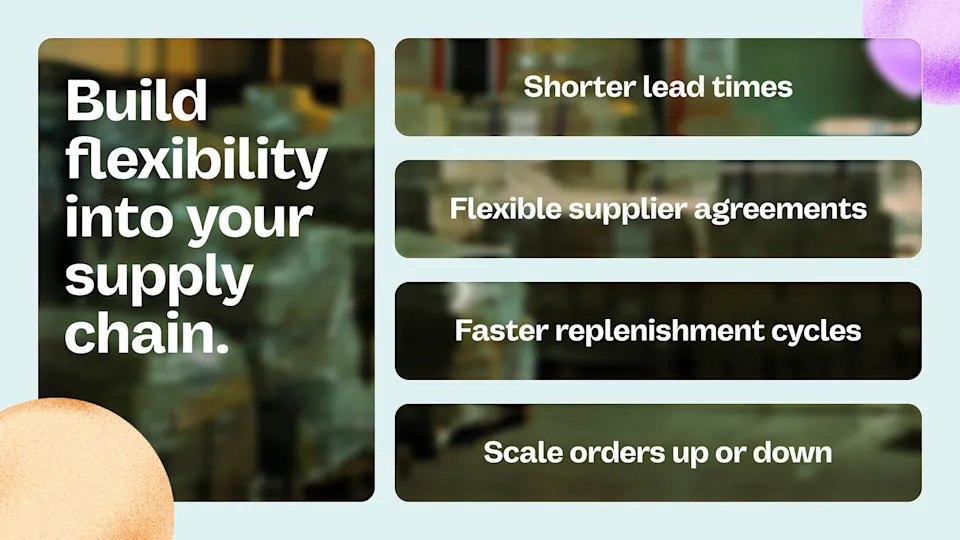
Building flexibility into your supply chain
Accurate demand forecasting becomes less critical when your business is built to adapt.
Retailers should focus on:
Shorter lead times
Flexible supplier agreements
Faster replenishment cycles
The ability to scale orders up or down
“In volatile conditions, flexibility is more valuable than scale.”
This approach reduces reliance on perfect forecasts — and increases resilience when forecasts are wrong.
Plan for the downside: end-of-season demand drops
How to avoid excess stock at end of season
A key part of demand forecasting that’s often overlooked is what happens when demand slows.
Seasonal demand doesn’t taper gradually — it often drops off sharply.
Without a plan, retailers face:
Excess stock
Heavy markdowns
Reduced profitability
To mitigate this:
Set predefined discounting thresholds
Monitor inventory levels throughout the season
Build clearance strategies into your initial forecast
Scenario planning: the future of demand forecasting
Instead of relying on a single forecast, leading retailers use scenario-based demand forecasting.
This means modelling different outcomes, such as:
Extended heatwave (sustained high demand)
Short heat spike followed by cooler weather
Wet or inconsistent summer
Each scenario should map:
Expected demand
Inventory requirements
Cash flow impact
Required actions
“The goal is not to predict the weather perfectly, but to be ready for whatever it delivers.”
The bottom line: demand forecasting is about adaptability
A hot summer can be a major opportunity for retailers — but only if it’s managed correctly.
The goal of demand forecasting isn’t perfect prediction.
It’s to ensure your business can:
Respond quickly to changing demand
Avoid overcommitting inventory
Protect cash flow
Maintain margins
Retailers who treat forecasting as a dynamic, ongoing process — rather than a fixed plan — will be best positioned to navigate whatever the summer brings.