
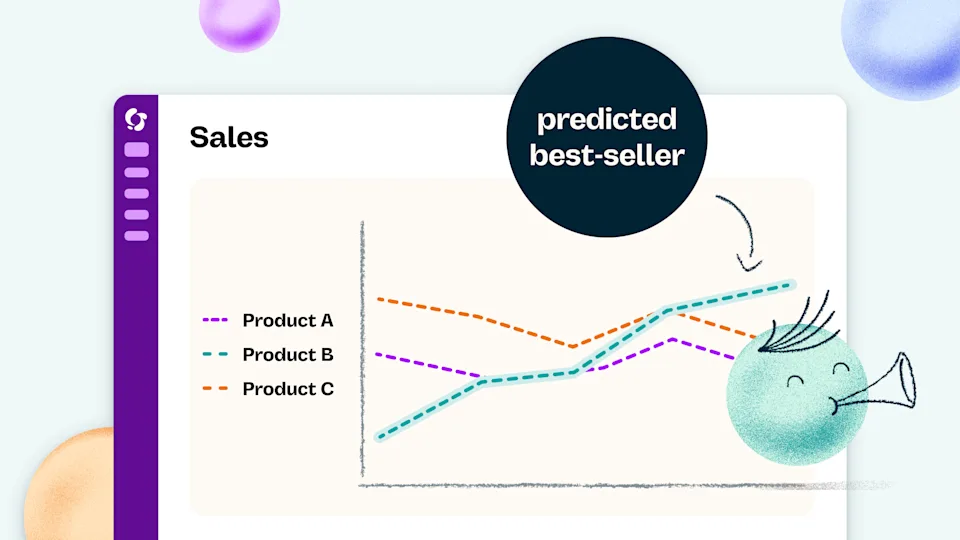
When you’re running an eCommerce brand, few questions feel bigger than what should we launch next? Do you double down on your hero product with a variation? Try an entirely new category? Or focus on bundles and upsells?
Too often, these decisions come down to instinct, trend-chasing, or competitor copycatting. But your own sales data already holds the signals you need. By approaching sales analysis strategically, you can take the guesswork out of product expansion — and confidently predict your “next best product.”
Why instinct isn’t enough
Plenty of brands have launched new SKUs that flopped. Why?
Ignoring seasonality: Launching heavy knitwear in spring won’t take off, no matter how stylish it looks.
Overestimating popularity: A product that feels “hot” on socials might not convert with your actual customer base.
Chasing competitors: What works for one brand doesn’t always translate to another audience.
Relying on gut feel alone makes new product development risky. Data lowers that risk.
The foundations: what sales analysis can reveal
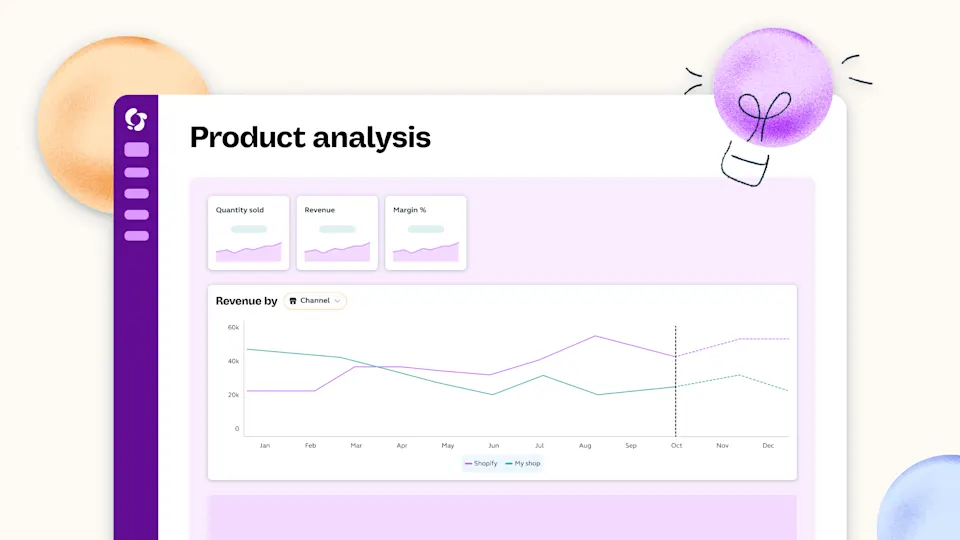
Your current sales tell you more than what’s selling — they tell you why. The right metrics help uncover patterns and opportunities:
Units vs. revenue vs. margin: Top-selling items by units might not deliver the best profit contribution.
Repeat purchase rates: Which products are sticky, driving customer loyalty, versus one-time experiments?
Channel differences: Some SKUs thrive on DTC but underperform in wholesale or marketplaces. That context matters when picking your next launch.
Spotting emerging trends in your range
Look beyond raw sales totals. Instead, track growth rates over 3, 6, and 12 months to see which SKUs are consistently climbing.
Outperformers show where demand is naturally expanding.
Underperformers can point to gaps — maybe customers wanted the complementary product you don’t yet stock.
Cross-SKU analysis reveals patterns (e.g., “customers who buy Product A almost always add Product B”). That’s a clue for bundles or logical next releases.
Using seasonality and product lifecycles
Every product has a natural rhythm. Some categories peak around holidays; others are evergreen. Overlaying sales data with calendar seasonality helps you plan launches that align with demand cycles.
Also consider lifecycle stages:
Introduction → Growth → Maturity → Decline.
If one of your core products is approaching maturity, the next best product should step in to sustain growth momentum.
Segmenting your customers for clues
Different customers buy differently. Segmenting sales analysis reveals:
High-value customers: What are their favourite SKUs? Launching variants here deepens loyalty.
First-purchase items: Gateway products that bring new customers in — expanding this range can accelerate acquisition.
Upsell drivers: SKUs that consistently appear in larger baskets suggest where bundles or complementary launches make sense.
Moving from analysis to product strategy
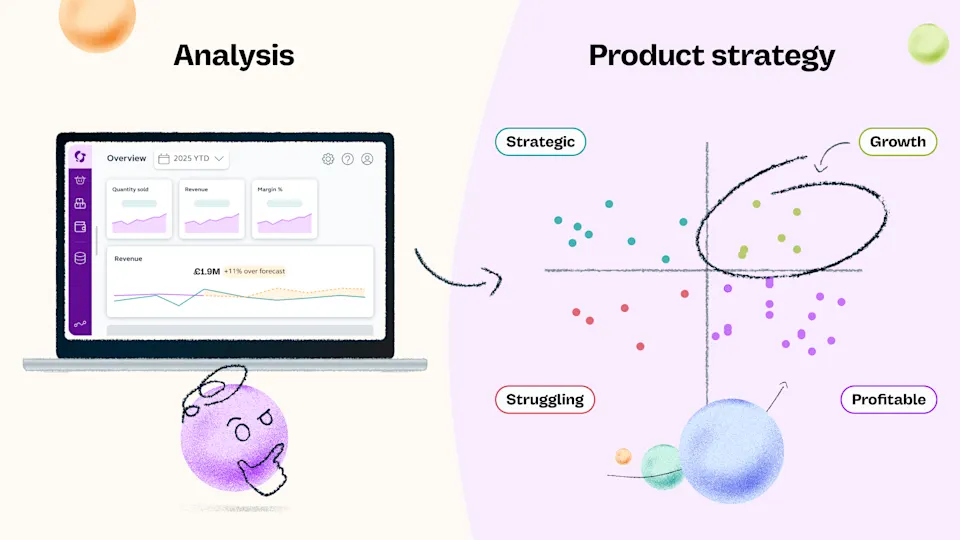
Once you’ve spotted the signals, the next step is to test and validate.
Scenario planning: Model what happens if you introduce a new variant vs. a whole new line.
Limited drops or pre-orders: Small-scale testing proves demand before overcommitting inventory.
Quantify opportunity: Look at forecasted demand and margin contribution to make sure your next best product is commercially viable, not just exciting.
How Kaleidoscope helps
Kaleidoscope connects your sales, product and stock data in one place. That means you can see growth trends clearly, delve into product metrics and forecast demand for potential new products — without juggling endless spreadsheets.
Instead of guessing what’s next, you can back decisions with data and plan with confidence.
Conclusion
Your next best product isn’t hiding on TikTok or in your competitor’s store — it’s already hinted at in your own sales data. By analysing trends, seasonality, and customer behavior, you can cut the guesswork out of product expansion.
The result: smarter launches, stronger growth, and fewer costly mistakes.
Want to see how Kaleidoscope can help uncover your next big product opportunity? Get early access today.