
Every January, thousands of businesses head into Q1 with confidence. Budgets are signed off, forecasts are approved, plans are in motion. And yet — for most businesses — those forecasts are already wrong.
At Kaleidoscope, we believe there’s one specific day every year when businesses should stop trusting their original Q1 numbers and take a fresh look.
We’re calling it National Re-forecasting Day, which takes place on 17th January.
The problem with Q1 forecasts
Most businesses lock in their annual or Q1 forecast in late November or early December. On paper, this makes sense: the year is wrapping up, teams want clarity, and leadership needs numbers to plan against.
The problem is that December behaves nothing like the rest of the year.
It’s an anomaly — operationally, financially, and commercially. And when you build a Q1 forecast on top of December data, you inherit all of that distortion.
Why December skews your numbers
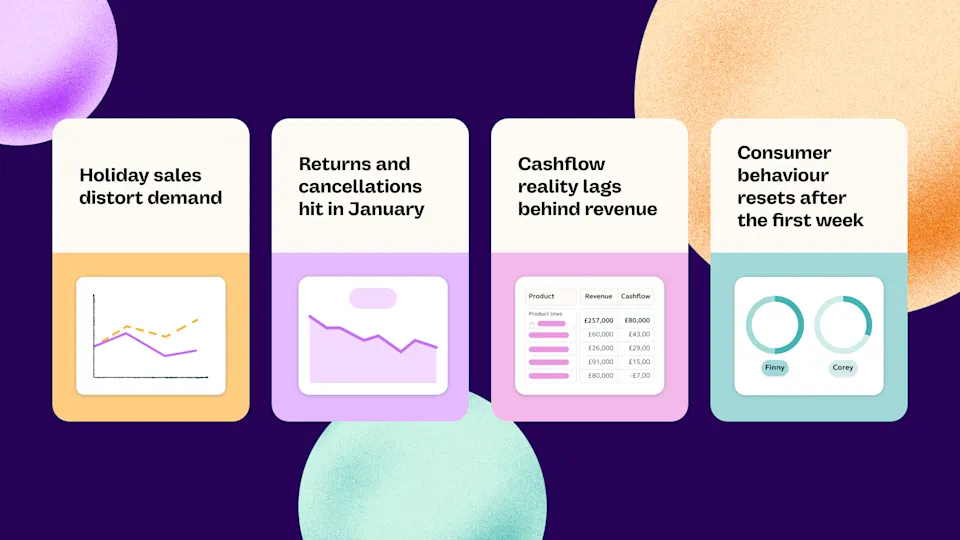
1. Holiday sales distort demand
For many businesses, December demand is artificially inflated by holiday promotions, gifting behaviour, or year-end buying cycles. For others, sales dip as customers pause spending.
Either way, December demand patterns rarely reflect how customers behave in January, February, or March.
2. Returns and cancellations hit in January
Revenue booked in December often doesn’t stick.
Product returns, subscription cancellations, failed payments, and refunds typically peak in early January — meaning your December performance looks stronger than the reality you’ll be dealing with in Q1.
3. Cashflow reality lags behind revenue
December invoices don’t usually clear until early or mid-January. Late payments, supplier invoices, and payroll adjustments all land after the year has technically closed.
Until those clear, you don’t have a true picture of your cash position or burn rate.
4. Consumer behaviour resets after the first week
By the second week of January, customer behaviour changes again.
Returns are processed. Budgets tighten. “No-spend January” kicks in. Marketing performance shifts as CPCs and CPAs rebalance post-holidays.
In other words: the market finally starts behaving normally again.
Why mid-January is the moment to re-forecast
Mid-January should be treated as the real start of the financial year for planning purposes.
We see the same pattern every year. Businesses go into January with numbers that feel solid, but they’re built on a December that behaves nothing like the rest of the year.
By mid-January, you finally have enough real data to see how Q1 will actually perform. That’s the moment to update your revenue, cashflow and workforce plans.
By around 15 January, several critical things have happened:
Holiday sales data has settled
Returns and cancellations are visible
December invoices and late payments have cleared
January consumer behaviour has stabilised
This is the point where forecasts stop being theoretical — and start reflecting reality.
That’s why we believe National Re-forecasting Day belongs in mid-January.
The rolling forecast gap
Most finance leaders already know this in theory. Rolling forecasting is widely recommended as best practice. It’s associated with better decision-making, greater agility, and fewer surprises. And yet, in practice, very few organisations do it consistently.
Why? Because most forecasting processes are still built on spreadsheets.
That creates a familiar set of problems:
Forecasts take days (or weeks) to update
Version control becomes chaotic
Departments work in silos
Data is static by the time it’s reviewed
Leaders default back to annual budgets because they’re easier to manage
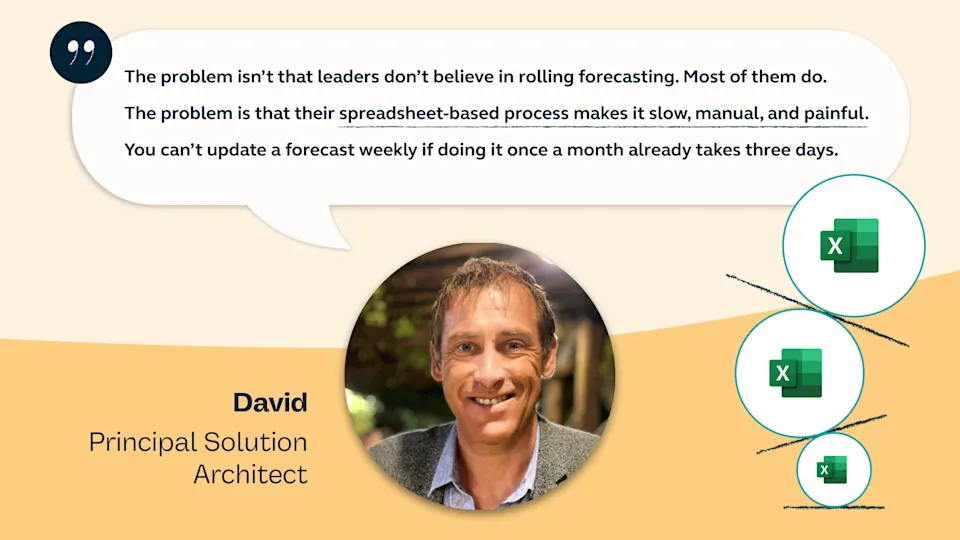
The problem isn’t that leaders don’t believe in rolling forecasting. Most of them do. The problem is that their spreadsheet-based process makes it slow, manual, and painful. You can’t update a forecast weekly if doing it once a month already takes three days.
What to check on National Re-forecasting Day
Re-forecasting doesn’t have to mean rebuilding everything from scratch.
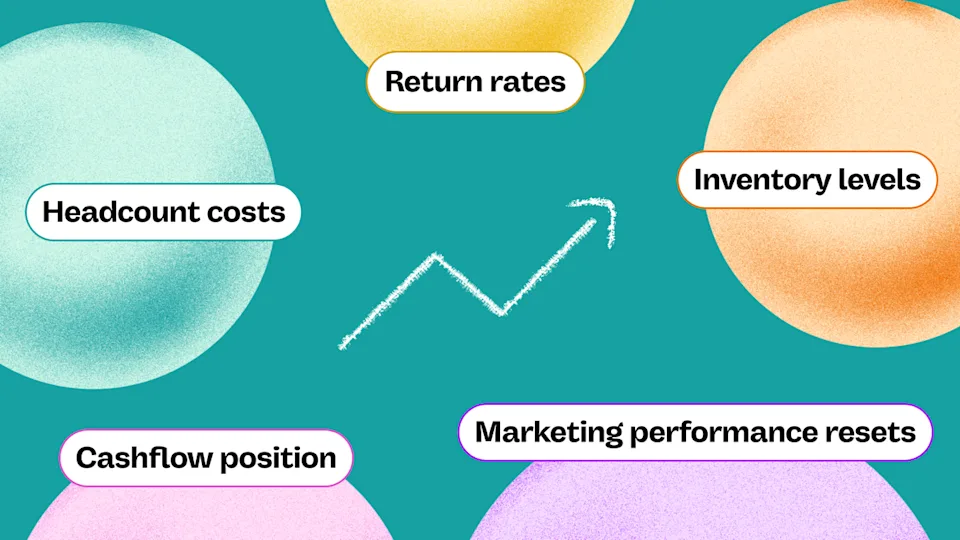
On National Re-forecasting Day, we recommend focusing on five key data points that most often change after December.
1. Return rates
Post-holiday returns can materially change your January revenue picture. Make sure your forecast reflects what actually sticks.
2. Inventory levels
Are you overstocked after the holiday rush? Excess inventory can tie up cash and force discounting earlier than planned.
3. Marketing performance resets
January acquisition costs often shift significantly compared to December. Update your assumptions around CPCs, CPAs, and conversion rates.
4. Cashflow position
Once December invoices and late payments have cleared, reassess your true cash position and burn rate.
5. Headcount costs
January payroll often includes changes to pensions, national insurance, benefits, or new hires. These adjustments can meaningfully affect your runway.
Re-forecasting shouldn’t be a quarterly panic
The goal of National Re-forecasting Day isn’t to create another one-off finance ritual.
It’s to highlight a bigger shift: forecasting should be frequent, lightweight, and habitual.
When forecasts are updated regularly:
They become easier to maintain
Accuracy improves over time
Teams can focus in detail on the next 30–60 days
Uncertainty is pushed further into the future, where it belongs
Or, as we like to put it: Rolling forecasting shouldn’t be a quarterly panic — it should be more like brushing your teeth.
How Kaleidoscope supports this shift
Kaleidoscope is built to make rolling forecasting practical, not theoretical. Instead of rebuilding spreadsheets, leaders can pull in the latest sales data, adjust assumptions, and re-run financial models in minutes — not days. That makes mid-January re-forecasting faster. And it makes weekly or monthly re-forecasting possible the rest of the year.
Because the more often you forecast, the easier — and more accurate — it becomes.
National Re-forecasting Day is our reminder that good planning starts with reality, not tradition.
If your Q1 forecast hasn’t been revisited since December, mid-January is the day to fix it.